jamwave

Search this blog

Showing posts with label jazz History. Show all posts

Oct 19, 2011

Jazz Standard


Jazz standards are musical compositions which are an important part of the musical repertoire of jazz musicians, in that they are widely known, performed, and recorded by jazz musicians, and widely known by listeners. There is no definitive list of jazz standards, and the list of songs deemed to be standards changes over time. Songs included in major fake book publications (sheet music collections of popular tunes) and jazz reference works offer a rough guide to which songs are considered standards.
Not all jazz standards were written by jazz composers. Many are originally Tin Pan Alley popular songs, Broadway show tunes or songs from Hollywood musicals – the so-called Great American Songbook.[1] A commonly played song can only be considered a jazz standard if it is widely played among jazz musicians. The jazz standard repertoire has some overlap with blues and pop standards.
The most recorded jazz standard was W. C. Handy's "St. Louis Blues" for over 20 years from the 1930s onward, after which Hoagy Carmichael's "Stardust" replaced it.[2] Today, the place is held by "Body and Soul" by Johnny Green.[3] The most recorded standard composed by a jazz musician is Thelonious Monk's "'Round Midnight".[4]

Readmore »»

Nov 4, 2008

Louis Armstrong


What a Wonderful World - Louis Armstrong

One of the greatest jazz musicians of all time, Louis Armstrong was responsible for innovations that filtered down through popular music to rock and roll. Armstrong himself put it like this: “If it hadn’t been for jazz, there wouldn’t be no rock and roll.” If it hadn’t been for Armstrong, popular music of all kinds - from jazz and blues to rock and roll - would be considerably poorer. As a trumpet player, Armstrong was a pioneering soloist and one of the first true virtuosos in jazz. As a singer, he was one of the originators of scat-singing, and his warm, ebullient vocal style had a big impact on the way all pop music was sung. As an entertainer, his charismatic presence allowed him to break through race barriers to become one of the first black superstars - a figure who would eventually become known as America’s Jazz Ambassador. Born in New Orleans on August 4, 1901, Armstrong was sent to a boys home at age 12, where he learned to play cornet. He apprenticed with his idol, Joe “King” Oliver, in 1917 and joined Oliver’s band in Chicago in 1922. Armstrong also played in Kid Ory’s band, where he replaced Oliver at the latter’s suggestion. As a bandleader in his own right, Armstrong cut some revolutionary jazz recordings with His Hot Five and His Hot Seven between 1925-27. He continued to sing and play jazz brilliantly into the Fifties and Sixties, even managing to unseat the Beatles from the top of the charts in 1964 with his spirited rendition of “Hello, Dolly!” from the Broadway musical of the same name. This feat made him the oldest musician in Billboard history to have a Number One song. Armstrong died at age 69 on July 6, 1971.

Louis Armstrong (1901-1971) was a trumpet player, singer, bandleader, and is widely regarded as one of the most influential artists in the history of jazz.

Armstrong was born and raised in New Orleans, a culturally diverse town with a unique musical mix of creole, ragtime, marching bands and blues. Although from an early age he was able to play music professionally, he never traveled far from New Orleans until 1922, when he went to Chicago to join his mentor, King Oliver. Oliver’s band played primitive jazz, a hotter style of ragtime, with looser rhythm and more improvisation, and Armstrong’s role was mostly backup.


Essential Songs

West End Blues
Muskrat Ramble
Mahogany Hall Stomp
Tight Like This
Heebie Jeebies
Basin Street Blues
Struttin’ With Some Barbeque
Ain’t Misbehavin’
Mack the Knife
Hello Dolly


TIMELINE

August 4, 1901: Louis Armstrong was born.

July 6, 1971: Louis Armstrong died in New York, NY.

Readmore »»

Oct 29, 2008

Dave Grusin

Born. 26th June 1934, Littleton, Near Denver, Colorado, U.S.A.
Dave Grusin was born far from the streets of New York, in the small farm town of Littleton, Colorado just south of Denver.His father Henri Grusin had also immigrated from Riga, Latvia around 1913.He had married an American-born woman, Rosabelle.The Grusin's settled in Littleton and raised three children, Dave's brother Don (also a well-known keyboardist) and a younger sister Dee.Henri Grusin was a watchmaker and jeweler by trade, but he was also an accomplished violinist.There was always music in the Grusin home and, although Dave had a very solid musical education before entering college, he dreamed of being a veterinarian.In a number of interviews, he's explained that he switched to music out of the guilt he felt for the immense effort and expense his father had already spent on his musical education.
When Dave Grusin hit New York City in 1959 and enrolled in the Manhattan School of Music he was planning a career as a teacher.A chance to join the Andy Williams Show as music conductor ended his plans for academia.
It was during his stint with Andy Williams that Dave Grusin met his future partner, Larry Rosen.

During this period Grusin managed to debut as an artist recording two jazz trio albums, 'Subways Are For Sleeping' and 'Piano, Strings and Moonlight.'Grusin left Andy Williams in 1964 and looked to his new aspiration.He wanted to write original music scores for motion pictures.His first film assignment was 'Divorce American Style' and from there the work in motion pictures and for television snowballed.Dave Grusin's career had taken off.While developing his career as a film score composer, Dave Grusin and Larry Rosen began producing contemporary jazz records for various companies.The two discovered and produced such artists as Earl Klugh, Angela Bofill, Tom Browne, Patti Austin, Lee Ritenour and others.Through Grusin-Rosen Productions they were helping to redefine sophisticated contemporary jazz for a whole new generation. Their production company soon led to the creation of their own record company, GRP Records.In Hollywood, Dave Crusin was composing important film scores including 'The Graduate', 'The Heart Is A Lonely Hunter', 'Three Days Of The Condor' , winning Academy Award nominations for 'Heaven Can Wait', (1979) 'The Champ', (1980) 'On Golden Pond', (1982) and 'Tootsie' (1983).The small screen was also a part of Grusin's compositional efforts. His credits included 'Baretta', 'Roots (Part 11)', 'Good Times', 'The Name Of The Game', 'Dan August', 'It Takes A Thief' and his most popular piece, the theme from 'St. Elsewhere' , the long-running NBC Network Television series.Dave Grusin also remained a dedicated pianist, performing on tour and with such albums as 'Mountain Dance,' 'Out Of The Shadows,' and 'Harlequin' with Lee Ritenour.It was 'Mountain Dance', produced in 1979 as a full digital recording that convinced Dave Grusin and Larry Rosen that this was indeed the new sound recording technology of the future.This digital philosophy became the cornerstone of their new record company.'Mountain Dance' featured the old Ronnie Laws / David Oliver tune 'Friends And Strangers', featured on deejay Robbie Vincents Radio London Shows of the late seventies / early eighties.Meanwhile, back in Hollywood, Dave Grusin captured his first Oscar for 'The Milagro Beanfield War' (1988) and won nominations again for 'The Fabulous Baker Boys' (1989) and 'Havana' (1990).Besides his numerous GRP releases, Grusin's also recorded for Columbia, Sheffield Lab and Polygram.
Dave Grusin has been a highly successful performer, producer, composer, record label executive, arranger, and bandleader. His piano playing ranges from mildly challenging to competent to routine, but he's primarily an accomplished film and television soundtrack composer. Grusin played with Terry Gibbs and Johnny Smith while studying at the University of Colorado. He was the assistant music director and pianist for Andy Williams from 1959 to 1966, and then started his television composing career. Grusin recorded with Benny Goodman in 1960 and recorded with a hard bop trio who included Milt Hinton and Don Lamond in the early '60s. He also played and did a session with a quintet including Thad Jones and Frank Foster. Grusin did arrangements and recorded with Sarah Vaughan, Quincy Jones, and Carmen McRae in the early '70s. He played electric keyboards with Gerry Mulligan and Lee Ritenour in the mid-'70s, then helped to establish GRP Records out of a production company. GRP developed into one of the top contemporary jazz and fusion companies; they were later taken over by Arista, then by MCA. Grusin continued recording through the '80s and '90s, doing numerous projects, from fusion and pop to working with symphony orchestras. He has also conducted the GRP Big Band, scored such films as The Fabulous Baker Boys, and performed duet sessions with his brother, Don, and Ritenour. In addition to his numerous GRP releases, Grusin has also recorded for Columbia, Sheffield Lab, and Polygram. ~ Ron Wynn, All Music Guide

Real Player

Albums:Subways Are for Sleeping (Epic 1961),Kaleidoscope (Sony 1964),Discovered Again (Sheffield Lab 1977) One of a Kind (GRP 1977),Mountain Dance (GRP 1979),Out of the Shadows (GRP 1982) Night-Lines (GRP 1983),And the NY-LA Dream Band (GRP 1984),Harlequin (GRP 1985) Live in Japan (GRP 1988),Sticks and Stones (GRP 1988),Zephyr (GRP 1988)
The Fabulous Baker Boys (GRP 1989),Migration (GRP 1989) Bonfire of the Vanities (Atlantic 1990),The Gershwin Connection (GRP 1991) Dave Grusin Presents GRP All-Star Big Band:... [live] (GRP 1993),Homage to Duke (GRP 1993) The Orchestral Album (GRP 1994),Cure [Original Soundtrack] (GRP 1995) Two for the Road: The Music of Henry Mancini (GRP 1996),3 Days of the Condor (Intermezzo 1997) Presents: West Side Story (Digital Sound 1997),Two Worlds (Decca 2000),

Readmore »»

Oct 22, 2008

Jazz History


BRIEF JAZZ HISTORY

By 1808 the Atlantic slave trade had brought almost half a million Africans to the United States. The slaves largely came from West Africa and brought strong tribal musical traditions with them. Lavish festivals featuring African dances to drums were organized on Sundays at Congo Square, in New Orleans until 1843, as were similar gatherings in New England and New York. African music was largely functional, for work or ritual, and included work songs and field hollers. In the African tradition, they had a single-line melody and a call-and-response pattern, but without the European concept of harmony. Rhythms reflected African speech patterns, and the African use of pentatonic scales led to blue notes in blues and jazz.
In 1922 Fitzgerald coined the phrase, "the Jazz Age" to describe the flamboyant—"anything goes"—era that emerged in America after World War I. Prohibition in the United States (from 1920 to 1933) banned the sale of alcoholic drinks, resulting in illicit speakeasies becoming lively venues of The Jazz Age, an era when popular music included current dance songs, novelty songs, and show tunes. Jazz started to get a reputation as being immoral and many members of the older generations saw it as threatening the old values in culture and promoting the new decadent values of the Roaring 20s. Kid Ory's Original Creole Jazz Band of musicians from New Orleans in 1922 became the first black jazz band to make recordings. However, the main centre developing the new "Hot Jazz" was Chicago, where King Oliver joined Bill Johnson. That year also saw the first recording by Bessie Smith, the most famous of the 1920s blues singers.
The 1930s belonged to popular swing big bands, in which some virtuoso soloists became as famous as the band leaders. Key figures in developing the "big" jazz band included bandleaders and arrangers Count Basie, Cab Calloway, Fletcher Henderson, Duke Ellington, Artie Shaw, Tommy Dorsey, Benny Goodman, and Glenn Miller.
In the mid-1940s bebop performers helped to shift jazz from danceable popular music towards a more challenging "musician's music." Differing greatly from swing, early bebop divorced itself from dance music, establishing itself more as an art form but lessening its potential popular and commercial value. Influential bebop musicians included saxophonist Charlie Parker, pianists Bud Powell, trumpeter Dizzy Gillespie and Clifford Brown, bassist Ray Brown.
Cool jazz emerged in the late 1940s in New York City, as a result of the mixture of the styles of predominantly white jazz musicians and black bebop musicians. Cool jazz recordings by Chet Baker, Dave Brubeck, Bill Evans, Gil Evans, Stan Getz and the Modern Jazz Quartet usually have a "lighter" sound which avoided the aggressive tempos and harmonic abstraction of bebop.
In the late 1960s and early 1970s the hybrid form of jazz-rock fusion was developed. Although jazz purists protested the blend of jazz and rock, some of jazz's significant innovators crossed over from the contemporary hardbop scene into fusion. Jazz fusion music often uses mixed meters, odd time signatures, syncopation, and complex chords and harmonies, and fusion includes a number of electric instruments, such as the electric guitar, electric bass, electric piano, and synthesizer keyboards. Notable performers of jazz fusion included Miles Davis, keyboardists Chick Corea and Herbie Hancock, drummer Tony Williams, guitarists Larry Coryell and John McLaughlin, Frank Zappa, saxophonist Wayne Shorter, and bassist-composer Jaco Pastorius.
In the early 1980s, a lighter commercial form of jazz fusion called pop fusion or "smooth jazz" became successful and garnered significant radio airplay. Smooth jazz saxophonists include Grover Washington, Jr., Kenny G and Najee. Smooth jazz received frequent airplay helping to establish or bolster the careers of vocalists including Al Jarreau, Anita Baker, Chaka Khan, and Sade.
In the late 1980s and early 1990s, several subgenres fused jazz with popular music, such as Acid jazz, nu jazz, and jazz rap. Acid jazz and nu jazz combined elements of jazz and modern forms of electronic dance music. While nu jazz is influenced by jazz harmony and melodies, there are usually no improvisational aspects.

Readmore »»

Oct 20, 2008

George Benson

George Benson
Your Booking Agent for Corporate & Private Events. Contact Grabow Entertainment today, we have thousands of talents to choose from for your next private or corporate party event.

George Benson

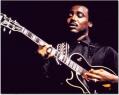
George Benson is simply one of the greatest guitarists in jazz history, but he is also an amazingly versatile musician; and that frustrates critics to no end who would paint him into a narrow bop box. He can play in just about any style -- from swing to bop to R&B to pop -- with supreme taste, a beautiful rounded tone, terrific speed, a marvelous sense of logic in building solos, and, always, an unquenchable urge to swing. His inspirations may have been Charlie Christian and Wes Montgomery -- and he can do dead-on impressions of both -- but his style is completely his own. Not only can he play lead brilliantly, he is also one of the best rhythm guitarists around, supportive to soloists and a dangerous swinger, particularly in a soul-jazz format. Yet George Benson can also sing in a lush soulful tenor with mannerisms similar to those of Stevie Wonder and Donny Hathaway; and it is his voice that has proved to be more marketable to the public than his guitar. George Benson is the guitar-playing equivalent of Nat "King" Cole -- a fantastic pianist whose smooth way with a pop vocal eventually eclipsed his instrumental prowess in the marketplace -- but unlike Cole, George Benson has been granted enough time after his fling with the pop charts to reaffirm his jazz guitar credentials, which he still does at his concerts.

George Benson actually started out professionally as a singer, performing in nightclubs at eight, recording four sides for RCA's X label in 1954, forming a rock band at 17 while using a guitar that his stepfather made for him. Exposure to records by Christian, Montgomery, and Charlie Parker got him interested in jazz, and by 1962, the teenaged George Benson was playing in Brother Jack McDuff's band. After forming his own group in 1965, George Benson became another of talent scout John Hammond's major discoveries, recording two highly regarded albums of soul-jazz and hard bop for Columbia and turning up on several records by others, including Miles Davis' Miles in the Sky. He switched to Verve in 1967, and, shortly after the death of Montgomery in June 1968, producer Creed Taylor began recording George Benson with larger ensembles on A&M (1968-1969) and big groups and all-star combos on CTI (1971-1976).

While the A&M and CTI albums certainly earned their keep and made George Benson a guitar star in the jazz world, the mass market didn't catch on until he began to emphasize vocals after signing with Warner Bros. in 1976. His first album for Warner Bros., Breezin', became a Top Ten hit on the strength of its sole vocal track, "This Masquerade," and this led to a string of hit albums in an R&B-flavored pop mode, culminating with the Quincy Jones-produced Give Me the Night. As the '80s wore on, though, George Benson's albums became riddled with commercial formulas and inferior material, with his guitar almost entirely relegated to the background. Perhaps aware of the futility of chasing the charts (after all, "This Masquerade" was a lucky accident), George Benson reversed his field late in the '80s to record a fine album of standards, Tenderly, and another with the Basie band, his guitar now featured more prominently. His pop-flavored work also improved noticeably in the '90s. George Benson retains the ability to spring surprises on his fans and critics, like his dazzlingly idiomatic TV appearance and subsequent record date with Benny Goodman in 1975 in honor of John Hammond, and his awesome command of the moment at several Playboy Jazz Festivals in the 1980s. His latter-day recordings include the 1998 effort Standing Together and 2000's Absolute Benson. All Blues appeared in spring 2001 followed by Irreplaceable in 2004. ~ Richard S. Ginell, All Music Guide

Readmore »»
banner
Portal Distro Linux
banner
Indonesian Cuisine
Blog Arkeologi Photobucket

Recent Posts

Recent Comments

  ©Template by Dicas Blogger.